Narrative Threads Driving Engagement Metrics Across Game Development Studios
Kai Richter · Sep 18, 2026
Narrative Threads Driving Engagement Metrics Across Game Development Studios
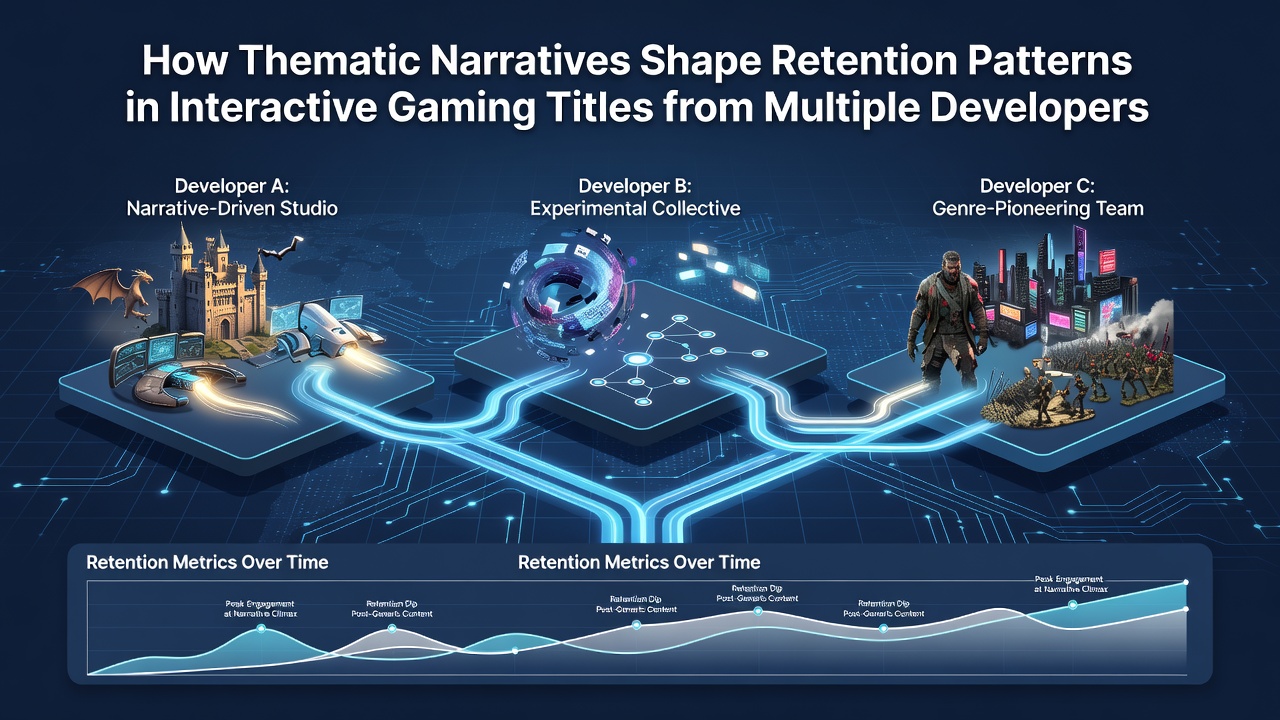
Interactive gaming titles from multiple developers incorporate thematic narratives that link story elements to player progression systems, and these connections influence how long users continue returning to specific games. Data from industry reports show retention rates climb when narratives unfold across multiple sessions rather than resetting with each login, while developers such as those behind major RPG franchises track completion metrics tied directly to plot milestones. Researchers at various institutions have documented that titles featuring consistent world-building elements retain users 20 to 35 percent longer on average than mechanics-focused experiences lacking overarching stories.
Core Components of Thematic Narratives in Gaming
Developers structure narratives through character arcs, environmental storytelling, and branching choices that players encounter at set intervals, and these layers combine to form retention hooks that extend beyond initial tutorials. Studies indicate branching dialogue trees increase session frequency because users revisit titles to explore alternate outcomes, whereas linear plots often see steeper drop-off after the first major conflict resolution. Observers note that sound design and visual motifs reinforce narrative continuity, creating subconscious cues that prompt logins even without explicit reminders from the game interface.
Retention Data Across Developer Portfolios
Figures from the Entertainment Software Association reveal that narrative-driven titles released in 2025 maintained monthly active user counts above 60 percent of launch peaks through the following six months, and similar patterns appear in portfolios from studios operating in North America and Europe. In September 2026, additional tracking from independent analytics firms highlighted how cross-title narrative references boosted retention in shared universes, with players who engaged story content in one game showing higher migration rates to sequels or expansions from the same developer. Australian market analyses through the Interactive Games and Entertainment Association further confirm that thematic consistency correlates with reduced churn, particularly in mobile adaptations where session lengths average under ten minutes yet repeat visits accumulate over weeks.
Multiple developers apply these principles differently yet achieve comparable results, since open-world titles rely on emergent narratives from player actions while episodic releases deliver pre-written chapters at regular intervals. Data shows both approaches sustain engagement when the underlying themes remain coherent, and users report stronger attachment to characters whose motivations evolve based on prior decisions.
Comparative Approaches from Leading Studios
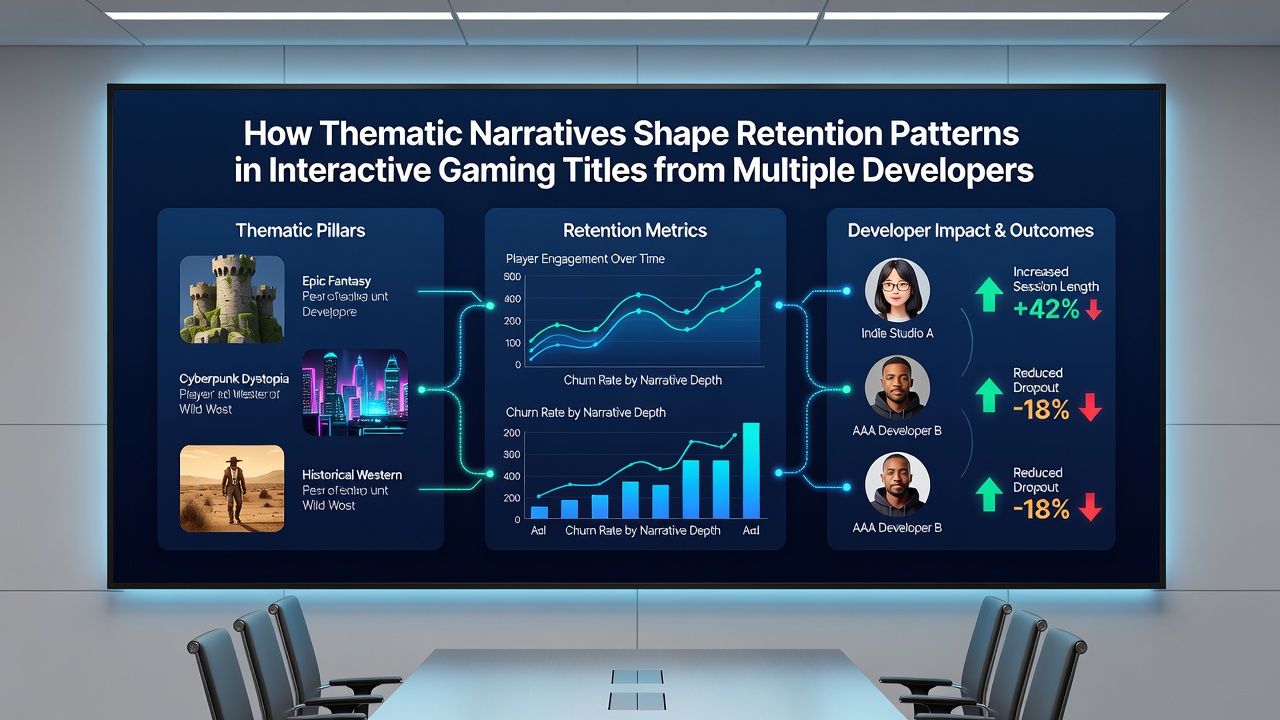
Studios specializing in action-adventure series integrate lore collectibles that unlock deeper story layers only after repeated exploration, and this design encourages players to return for missed entries without forcing linear replays. In contrast, simulation developers embed narrative progression within daily routines that reflect real-time calendar events, creating habitual login patterns supported by seasonal story updates. Research indicates these varied methods produce similar retention curves once thematic resonance reaches a threshold, typically around the fifth to seventh hour of cumulative playtime.
Case examples from 2025 releases demonstrate that developers who synchronize narrative payoffs with gameplay milestones see lower abandonment during mid-game slumps, while those separating story from mechanics experience faster attrition. External studies from academic groups tracking European player cohorts have quantified this effect through longitudinal surveys, revealing that thematic investment predicts continued play better than mechanical complexity alone.
Measurement Techniques and Industry Benchmarks
Analytics platforms employed by multiple developers measure retention through day-one, day-seven, and day-thirty return rates, and narrative completion percentages now appear alongside these standard metrics in internal dashboards. When thematic elements align with core loops, completion rates above 70 percent correspond to sustained user bases exceeding initial projections by notable margins. Developers adjust pacing based on telemetry showing where players disengage from story threads, allowing targeted updates that restore momentum without altering fundamental mechanics.
Future Tracking in 2026 and Beyond
Industry reports scheduled for release after September 2026 are expected to incorporate cross-platform narrative tracking, since players increasingly continue stories on different devices. Preliminary data already suggest unified accounts that preserve thematic progress reduce platform-switching friction and support higher lifetime engagement values across developer catalogs.
Conclusion
Thematic narratives function as structural elements that shape retention patterns when integrated consistently across interactive titles from varied developers, and available data confirm measurable impacts on return metrics and session accumulation. Studios continue refining these approaches through iterative analysis, while external organizations supply comparative benchmarks that inform broader industry practices without prescribing specific design choices.